Kitchen measurements: converting decilitres to grams and cups to millilitres

The recipe asks for 200 grams of flour, but all you have is a decilitre measure. Or the recipe you found online talks in cups and degrees Fahrenheit. Converting kitchen measurements is an everyday puzzle, especially when baking or trying recipes from abroad.
This guide collects the most common kitchen measures and abbreviations, the approximate weight of a decilitre of everyday ingredients, and conversions for US cups and oven temperatures. The weights are approximate, because the exact amount depends on the ingredient and on how you fill the measure.
Basic kitchen measures and abbreviations
A teaspoon (tsp) is 5 ml, a tablespoon (tbsp) 15 ml and a decilitre (dl) 100 ml. One decilitre therefore holds about 6 or 7 tablespoons, and one tablespoon holds 3 teaspoons. Older recipes sometimes use cups or glasses, but their size varies, so a decilitre or a scale is more reliable.
Always measure level, never heaped. Loosen flour with a spoon first, spoon it into the measure and level it with the back of a knife. If you press the measure into the bag, you can easily pack in far more flour than the recipe intends. A set of measures takes up almost no space and is one of the basics we recommend in our guide to cooking in a small kitchen.
Why a decilitre is not the same as 100 grams
A decilitre measures volume, a gram measures weight. For water they match, because a decilitre of water weighs about 100 grams. Light, airy ingredients such as flour and oats weigh much less per decilitre, while dense ones such as sugar and salt weigh more. That is why every ingredient has to be converted separately; one factor will not work for everything.
The weights below are approximate and based on widely used household conversion tables. They are fine for everyday cooking, but for precise baking a kitchen scale is always the safest choice.
How much does 1 dl weigh? The most common conversions
Wheat flour: 1 dl is about 65 g, rye flour about 55 g and rolled oats about 35 g.
Sugar: 1 dl is about 85 g, icing sugar about 55 g and soft brown sugar about 70 g.
Uncooked rice: 1 dl is about 85 g. Dry pasta: 1 dl is about 55 g.
Water, milk, cream and yoghurt: 1 dl is about 100 g.
Oil and melted butter: 1 dl is about 90 g.
Fine salt: 1 dl is about 120 g, so 1 tsp weighs about 6 g.
Grated cheese: 1 dl is about 50 g. One medium egg weighs about 55 g.
How to convert grams to decilitres
Once you know how much a decilitre of an ingredient weighs, the conversion is simple division. Divide the grams in the recipe by the weight of one decilitre. For example, 200 g of wheat flour is 200 / 65, or about 3 dl. The other way round, you multiply: 2 dl of sugar weighs about 2 × 85, or 170 g.
For rice and pasta, converting helps with portions. If uncooked rice weighs about 85 g per decilitre, a typical adult portion of 60 or 70 grams is just under a decilitre. Browse our rice recipes if you want to put the maths into practice straight away. Egg weight varies with size; read more in our guide to egg freshness and boiling times.
Cups, ounces and pounds: foreign measures
A US cup is about 2.4 dl, so a handy rule of thumb is 1 cup = 2.4 dl. Older British and Australian recipes may use a cup of a different size, so check where the recipe comes from. Because a cup measures volume, its weight varies by ingredient just like a decilitre's.
For weight, an ounce (oz) is about 28 g and a pound (lb) about 454 g. If a recipe is written in ounces, the rounded conversion 1 oz = 28 g works well for cooking.
Oven temperatures from Fahrenheit to Celsius
To convert Fahrenheit to Celsius, subtract 32, multiply the result by five and divide by nine. The most common oven temperatures are 350 °F, about 180 °C, 400 °F, about 200 °C, and 425 °F, about 220 °C. Remember too that many recipes are written for conventional top and bottom heat. With a fan oven the temperature is usually lowered by about 20 degrees.
Spices and small amounts
With small amounts precision matters most, because an extra teaspoon of salt or chilli is noticeable straight away. Measure spices level and add the rest to taste. Spices also lose flavour as they age, so see the tips in our guide to storing spices.
Everyday cooking does not need pharmacy-level precision. When the ingredients arrive already measured, as with our baked pasta with minced meat and cheese, there is even less maths left to do.
Ingredients measured out for you
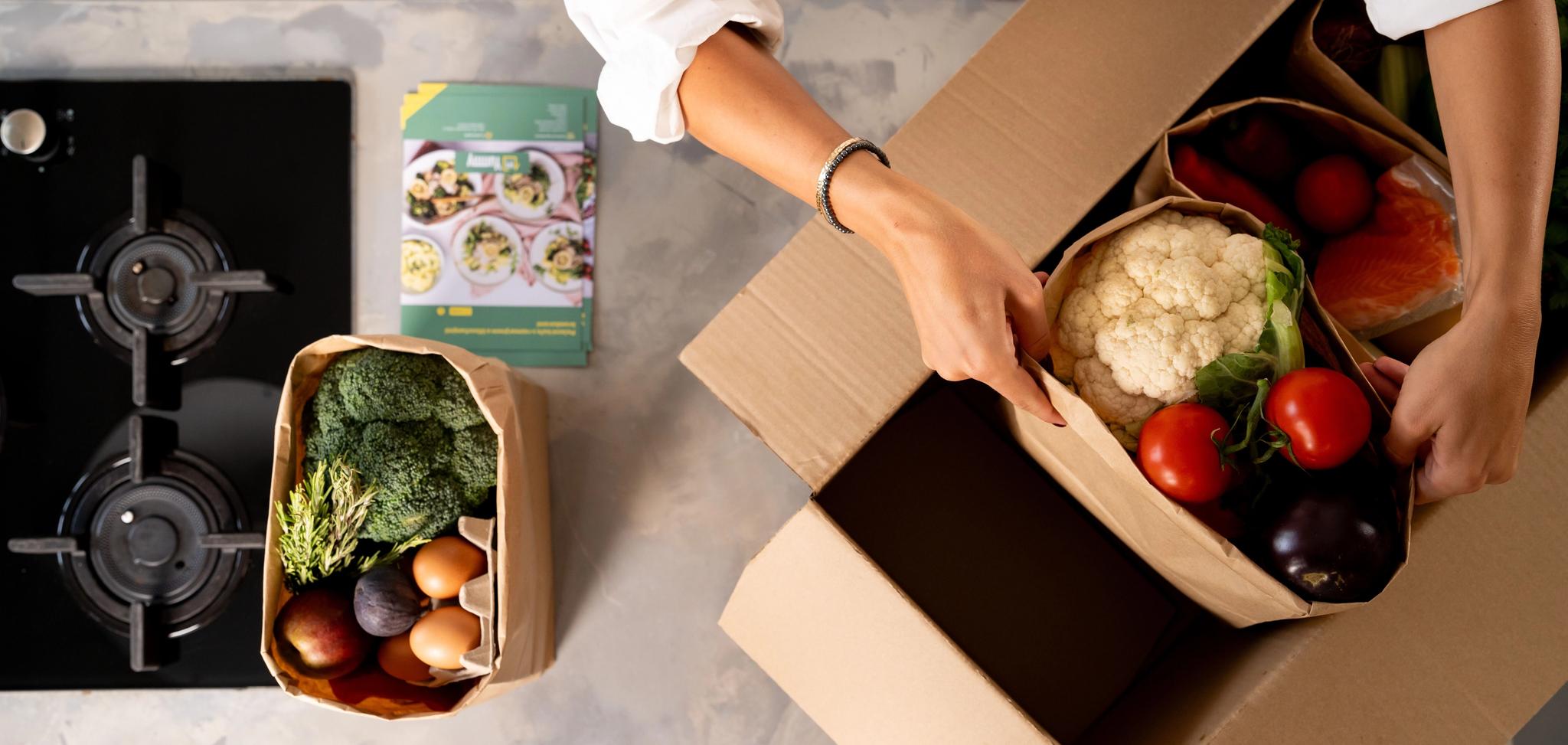
Yummy box ingredients arrive in the right amounts with the recipe, so weeknight cooking needs no decilitre or gram maths.