Tzatziki: how to make the Greek yoghurt and cucumber sauce at home

Tzatziki is a cold Greek sauce made from thick yoghurt, grated cucumber, garlic and olive oil. It takes about ten minutes and needs no cooking, but a good texture comes down to two things: how thick the yoghurt is and how well you squeeze the liquid out of the cucumber.
In Greece, tzatziki is eaten as a starter with bread, as part of a meze spread and as a sauce with grilled dishes such as souvlaki and gyros. The cool, fresh sauce also balances spicy and richer food, so it works far beyond the barbecue.
What you need for tzatziki
There are only a few ingredients, so each one matters. The basic recipe uses yoghurt, cucumber, garlic, olive oil, salt and pepper. Many cooks also add a little lemon juice or wine vinegar and fresh herbs.
Yoghurt
Choose a thick, full fat Greek style yoghurt. It should hold on a spoon rather than run off it. If you only have thinner yoghurt, strain it: put it in a sieve lined with a coffee filter or muslin over a bowl and let it drain in the fridge for about half an hour. For a plant based version, use a thick, unflavoured oat or soy yoghurt.
Cucumber
Cucumber is almost all water, which is exactly why tzatziki so easily turns watery. Grate it coarsely, mix in a pinch of salt and squeeze out the liquid. Salt draws the water out, so squeezing works better after the cucumber has rested for a moment. A firm, fresh cucumber gives the best texture, and you will find tips for keeping it crisp in Cucumber storage.
Garlic, oil and acidity
Raw garlic is the signature flavour of tzatziki, but it also gets stronger as the sauce stands. Grate the cloves finely so the flavour spreads evenly and no sharp pieces are left. Olive oil softens the taste and gives a silkier texture, while a dash of lemon juice or wine vinegar adds freshness.
Basic recipe for about four
This recipe makes about 450 grams of tzatziki, enough as a sauce for four. You need 300 g thick yoghurt, half a cucumber, 1 or 2 garlic cloves, 1 tbsp olive oil, 1 tsp lemon juice or wine vinegar, 1 or 2 tbsp fresh dill or mint, plus salt and black pepper.
How to make tzatziki step by step
Coarsely grate half a cucumber (about 150 g). There is no need to peel it, but you can scrape out the watery seeds with a spoon.
Mix the grated cucumber with a pinch of salt, leave it for 10 minutes, then squeeze out the liquid by hand or through a clean towel.
Put 300 g of thick Greek style yoghurt in a bowl.
Add 1 or 2 finely grated garlic cloves. Start with less, as the flavour gets stronger as it stands.
Stir in the cucumber, 1 tbsp olive oil, 1 tsp lemon juice or wine vinegar and 1 or 2 tbsp chopped dill or mint.
Season with salt and black pepper. Taste at the end, because the cucumber already brought some salt.
Let the tzatziki rest covered in the fridge for at least 30 minutes and drizzle a little olive oil on top before serving.
The most common mistakes and how to avoid them
Watery tzatziki is almost always caused by unsqueezed cucumber or yoghurt that is too thin. If the sauce is already mixed and starts to loosen, pour off the liquid that has separated on top and stir in a spoonful of thick yoghurt.
A harsh or burning taste usually comes from a lot of garlic combined with a long resting time. Another common mistake is serving tzatziki straight after mixing. Given at least half an hour in the fridge, the garlic mellows and the flavours come together.
Dill, mint and other variations
In Greece, tzatziki usually gets dill or mint, sometimes both. Dill gives a fresh, Nordic note, while mint is cooler and slightly sweet. Chop fresh herbs just before using them, and if you have some left over, see the tips in How to store fresh herbs.
Other additions worth trying are lemon zest, chopped walnuts and a pinch of dried oregano. You can adjust the thickness to the use: as a dip tzatziki can be thick, as a sauce a little looser and as a salad dressing thinned with a splash of water. Turkish cacık is a close relative that is often made thinner, and Indian raita is a lighter cousin.
What to serve tzatziki with
Tzatziki goes with grilled chicken, pork, lamb and salmon, alongside falafel and halloumi, and as a filling for pita bread. It also works as a dip for vegetable sticks, a topping for baked potatoes and a burger sauce. For a ready made weeknight idea, try baked citrusy salmon with herbal rice and tzatziki.
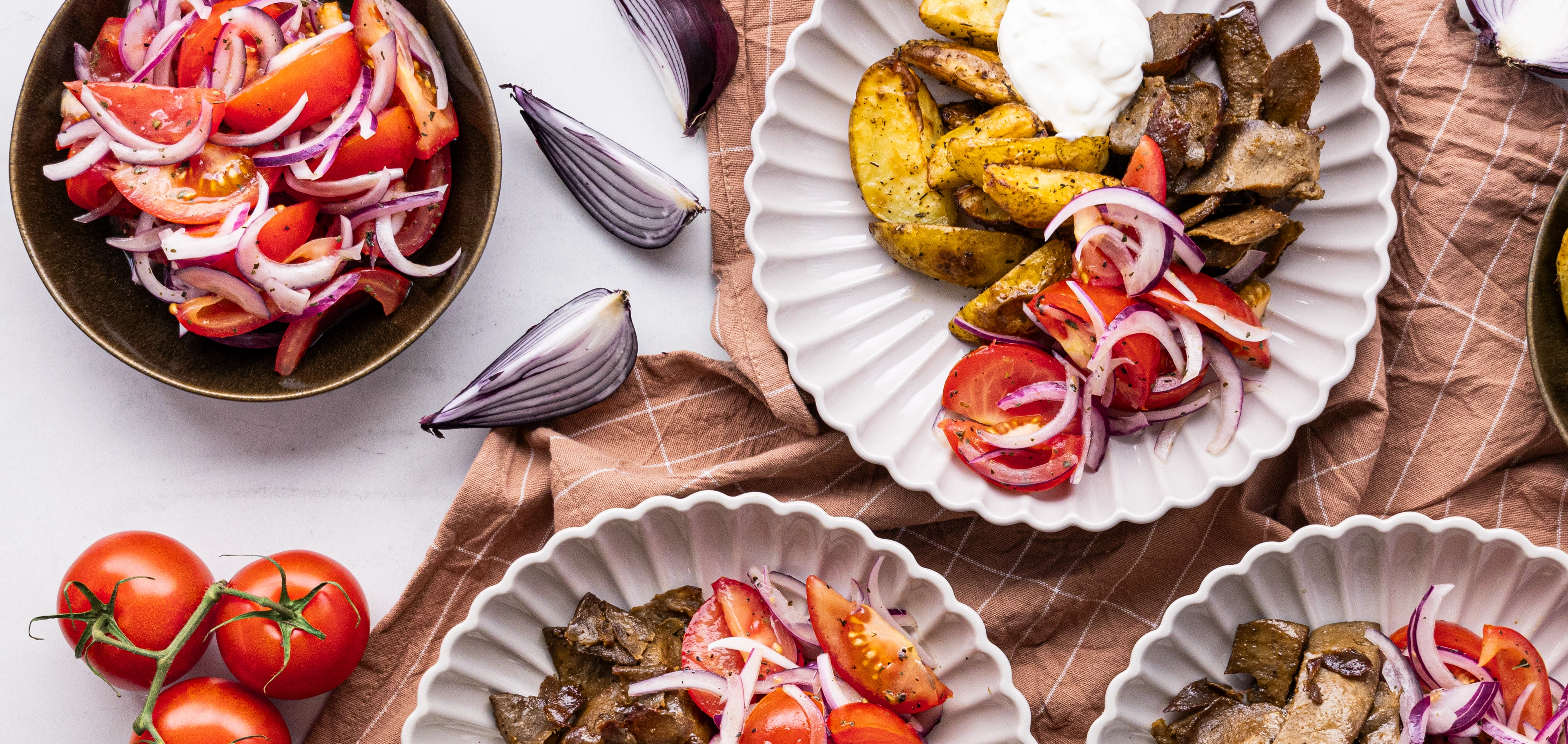
For more dishes where tzatziki is a natural match, browse our gyros and kebab recipes. Gyros, souvlaki and kebab are its most classic companions.
How long tzatziki keeps
Homemade tzatziki keeps for about three or four days in an airtight container in the fridge. A little liquid may separate on top, so stir before serving. Freezing is not a good idea, as the yoghurt and cucumber lose their texture when thawed. Take the sauce to the table only when serving and return leftovers to the fridge as soon as possible.
Greek flavours for a weeknight
Yummy recipes include Greek favourites such as gyros, souvlaki and tzatziki. You get pre measured ingredients and clear instructions delivered to your door.