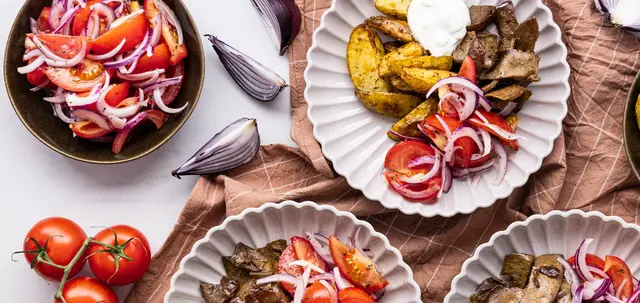
Gut health and food: how to eat for your gut

Gut health has become one of the most talked-about food topics of recent years, and a lot of expensive speciality products have grown around it. In everyday life, however, gut wellbeing rests on very ordinary things: enough fibre, variety in the plants you eat and regular meals.
This guide covers what fibre means in practice at the dinner table, where you get it best and how to make changes so your stomach does not protest. Every tip is based on what an ordinary grocery store already stocks.
Fibre is the basic food of the gut
Fibre is a plant carbohydrate that the body does not digest. It travels to the gut, where it keeps things moving and feeds the microbes living there. Finnish national nutrition recommendations set the fibre intake at a minimum of 25 grams a day for women and 35 grams a day for men. In practice most people fall short: according to the FinRavinto survey, men get roughly 22 grams and women roughly 20 grams of fibre a day.
The gap between the recommendation and actual intake is therefore fairly small, a few dozen grams a day. One slice of wholegrain bread, a decilitre of beans or a generous serving of vegetables often closes it, and there is no need to rebuild the whole diet.
Where fibre comes from
The main sources of fibre are wholegrain products, legumes, vegetables, fruit and berries, plus nuts and seeds. Wholegrain pasta, rye bread, pearl barley and oats contain clearly more fibre than their white counterparts, and the swap works without changing the dish itself.
Legumes are the most efficient of all: lentils, chickpeas and beans bring both fibre and protein into the same serving. A good example of an everyday meal built around legumes and wholegrains is Hummus Bowl with Veggies, Buckwheat & Feta Cheese. And when you rotate the vegetables and fruit you buy, the microbes get a more varied diet for the same effort.
Six ways to eat for your gut
Swap white pasta, rice and bread for wholegrain versions, the quickest way to add fibre.
Add legumes such as lentils, chickpeas and beans to two or three meals a week.
Aim for many different plants a week rather than one favourite, since variety feeds gut microbes.
Include fermented foods such as yoghurt, kefir, sauerkraut or kimchi.
Drink enough water, because fibre needs liquid to do its job.
Increase fibre gradually over a couple of weeks so your stomach can adjust.
Fermented foods and variety
Fermented foods such as yoghurt, kefir, sauerkraut and kimchi contain lactic acid bacteria. You do not need large amounts of them; a small daily portion as part of a normal diet is plenty. If dairy does not suit you, plant-based fermented options work on the same principle.
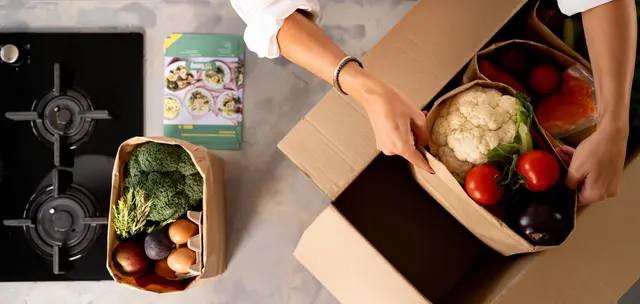
Variety matters here as much as quantity. Instead of eating the same cucumber and tomato every day, rotate the types of plants weekly: root vegetables, brassicas, legumes, berries and wholegrains. This is exactly where a meal box helps, because a pre-planned week brings vegetables to the table that you would not have picked yourself.
Make the changes calmly
Raising fibre intake quickly often causes bloating and gas. Add fibre gradually, for example one change a week: bread first, then pasta, then one legume-based meal. Remember to drink enough at the same time, because fibre needs liquid to work.
Meal rhythm plays a part too. Regular meals and sensible portions help digestion more than any single superfood. If stomach trouble is long-lasting or severe, the cause may be something other than diet, and it is worth seeing a healthcare professional.
Eating for your gut therefore needs no special products and no precise calculations. It is enough that every meal includes a little fibre, that the vegetables rotate from week to week, and that changes come at a pace which still fits your everyday life a month from now.
Fibre and vegetables every week
Yummy delivers the week's meals and their vegetables to your door, so fibre-rich food reaches the table without separate planning.