Teriyaki sauce: how to make it at home and use it in everyday cooking

Teriyaki sauce is a sweet, salty and glossy sauce that turns ordinary chicken, salmon or tofu into something that tastes like a restaurant dish in minutes. Many people buy it ready-made in a bottle, but homemade teriyaki takes four ingredients and about ten minutes, and you can adjust the sweetness and saltiness to your own taste.
In this guide we explain what teriyaki actually means, how to make the sauce yourself and how to use it in everyday cooking without burning the pan. If you want to jump straight in, a good first teriyaki meal is our chicken with teriyaki sauce and rice.
What does teriyaki mean?
The word teriyaki comes from Japanese. Teri means gloss or shine, and yaki means grilled or broiled. So teriyaki originally described a cooking method: fish or meat was cooked and brushed with a sauce whose sugar caramelised into a beautiful, shiny glaze. In Japan the sauce is often made at home, while bottled teriyaki is more common elsewhere in the world.
The flavour of teriyaki rests on a few basic parts. Soy sauce brings salt and deep umami, mirin, a sweet rice wine, adds soft sweetness, sake, a drier rice wine, gives background depth, and sugar makes the sauce glossy. Balance matters most: a sauce that is too salty hides the flavour of the ingredient, while one that is too sweet tastes like candy.
How to make teriyaki sauce at home
For four people you need 4 tablespoons of soy sauce, 4 tablespoons of mirin, 2 tablespoons of sake and 1 tablespoon of sugar. Measure everything into a small saucepan, bring it to the boil and let the sauce simmer gently for 3 or 4 minutes until it turns slightly syrupy. It thickens further as it cools, so do not reduce it too far.
You can find mirin and sake on the Asian food shelf of most larger supermarkets. If you have no sake, replace it with water. If you cannot find mirin either, add more sugar or honey and a splash of rice vinegar; the flavour is a little simpler but still good. If you like, grate in some fresh ginger or garlic.
For a thicker teriyaki to spoon over rice, mix a teaspoon of cornflour into a tablespoon of cold water and stir it into the sauce at the end of cooking. Note that regular soy sauce usually contains wheat. For a gluten-free meal, choose a gluten-free soy sauce or tamari and always check the label.
Teriyaki sauce at a glance
Basic recipe for four: 4 tbsp soy sauce, 4 tbsp mirin, 2 tbsp sake or water and 1 tbsp sugar.
Simmer the sauce gently for 3 or 4 minutes until it turns slightly syrupy.
Thicker sauce: mix 1 tsp cornflour into 1 tbsp cold water and stir it in at the end.
Add the sauce to the pan only at the end, because the sugar burns easily.
Do not use a raw meat marinade as a sauce as it is: boil it thoroughly or set aside a separate portion.
Gluten-free version: choose a gluten-free soy sauce or tamari and check the label.
Keep the sauce in a lidded jar in the fridge and use it within a week.
How to use teriyaki in everyday cooking
The most important rule is timing. The sauce contains a lot of sugar, which burns quickly in a hot pan. So cook the chicken, meat or fish until almost done first and add the teriyaki only for the last couple of minutes, letting the surface turn glossy in the sauce. Chicken must be cooked all the way through; read more in our guide to chicken breast cooking times and internal temperature.
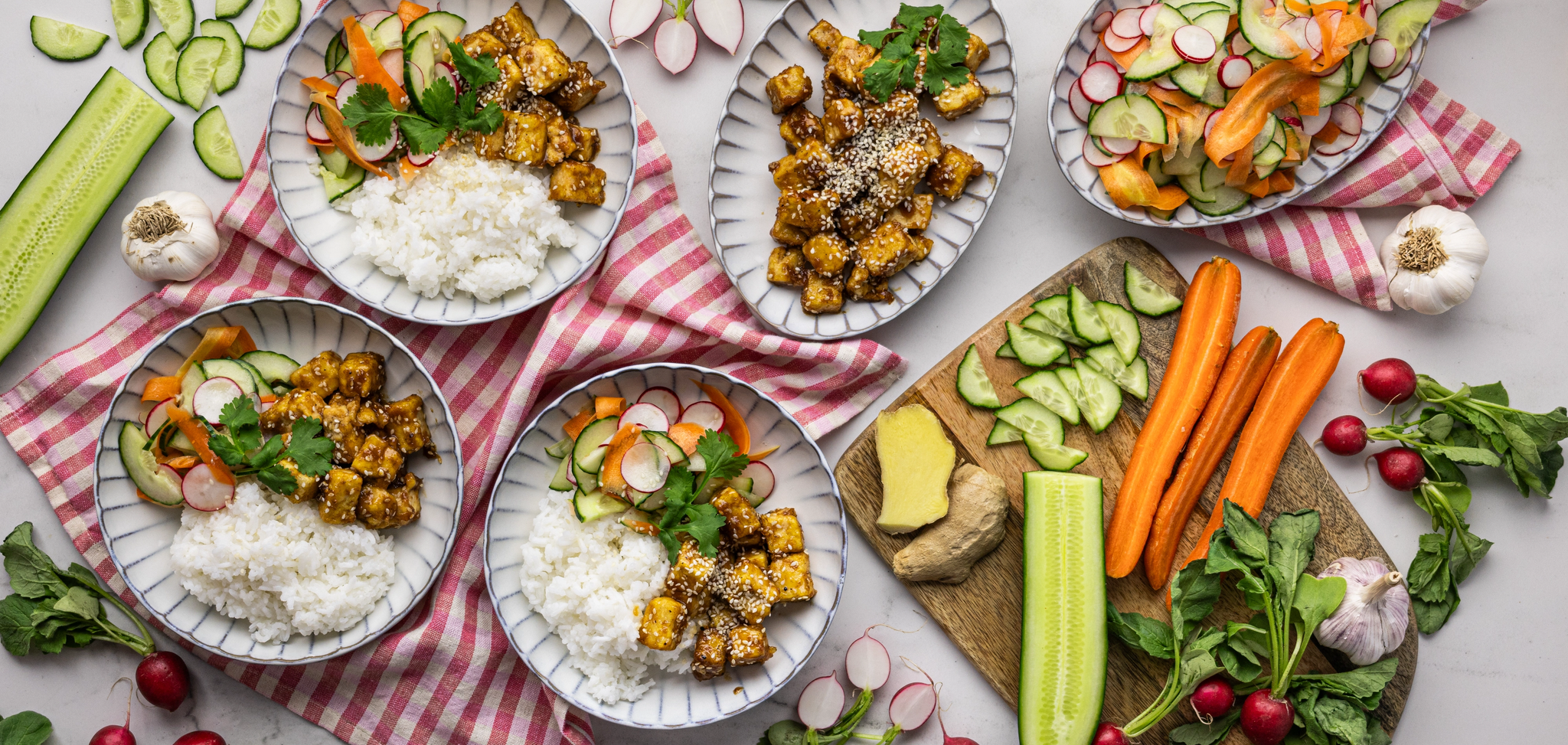
Teriyaki works just as well in the oven. Brush salmon with the sauce only towards the end of baking, so the surface shines instead of scorching. For inspiration, try our Japanese-style teriyaki salmon with rice. Tofu is best pressed dry, cubed and fried until crisp before you toss it in the sauce. A ready meal built on this idea is our teriyaki tofu with rice and marinated vegetables.
Teriyaki can do a lot more, too. Use it as the base sauce for a stir-fry, mix it into minced meat for meatballs or burgers, whisk it with sesame oil into a salad dressing, or reduce it into a thicker dip for chicken wings and spring rolls.
Marinate safely
Teriyaki also makes a good marinade. Marinate chicken or meat in the fridge for anything from half an hour to a few hours. Fish needs only about half an hour, because the salty marinade will otherwise start to change its texture. Leave the starch out of a marinade. Never use a marinade that has been in contact with raw meat or fish as a sauce as it is. Boil it thoroughly, or set aside a separate portion for the sauce before you start marinating.
Sides and storage
The classic partner for teriyaki is steamed rice, but noodles, roasted vegetables and fresh pickled vegetables work well too. Finish the plate with sesame seeds and spring onion. You will find more ideas in our rice recipes.
Homemade teriyaki sauce keeps in a lidded glass jar in the fridge for about a week. If you added fresh garlic or ginger, use it within a few days. That makes a double batch well worth it: a weeknight teriyaki dinner is then ready in fifteen minutes.
Teriyaki nights without the shopping list
Yummy box brings the ingredients for teriyaki chicken, salmon and tofu in the right amounts, with step-by-step recipes straight to your door.